Game Research and Evaluation –Investigate the use of educational games in K-12 settings in scholarly research Library databases. Present a synopsis of recent research (within the past five years) findings from at least five research articles and conclude with a personal reflection of your own feelings about educational gaming as a result of doing this research.
Even though we are in the 21st century, one challenge in k-12 schools has always been how to support and use the powerful and well-known technologies that exist today, for teaching and learning. From the beginning of the 21st century, educational games have been seen as one of the potential mediums that can be used to support what has been referred to as “the 21st-century competencies, or the 4 Cs: creativity, collaboration, communication, and critical thinking”. Educational games in the classroom “provide assessments that support skills, such as problem-solving, critical thinking, and innovative thinking”. Research that examined the relationship between educational games and student learning revealed that using these games provided a higher level of engagement and motivation for students than traditional methods of instruction. Educational games have also been shown to support diverse learning styles, encourage collaboration and interaction, and promote active learning (Hebert et al., 2021).
The role of educational games is to teach specific skills, knowledge, and attitudes other than simply entertainment. In the past, researchers have explored educational game’s effects on student’s performance. They found out that learning new concepts and skills is enhanced through the use of digital and non-digital games. Educational games have supported learning in two major ways: “One, educational games can motivate students to combine knowledge from various disciplines and use it in decision-making, and two, students can test how outcomes change according to the choices and decisions they make. Also, students can communicate with other participants and discuss game-related moves, which aids in coordination increase and improve association skills” (Adipta et al, 2021).
Educational games are used to make learning fun, effective, and engaging for k-12 students. They are designed to improve students’ learning as well as increase participation in a wide range of activities and not merely for entertainment purposes. These educational games are purposely developed with the intention of creating a digital environment in an educational context, where the major focus is to learn rather than to “have fun”. Educational games are created to stimulate the curiosity and imagination of students and to present educational content in a more interesting way than the traditional classroom. They are a “source of enjoyment with goals that are personal, clear, and relevant and are meant to capture the attention of the learner”. Educational games also provide rewards with challenges that are appropriate to the student’s level, which contributes to an increase in their confidence and engagement. They also help to promote higher levels of skills (Fadda et al. 2021).
As more and more research are done to point out the educational value of games grows, the interest in including more educational games in the teaching and learning process has increased. It has been found that educational games tend to have high learning potential, and studies show that there is a positive correlation between gaming activities and student achievement. With all this and other known benefits of the use of educational games in k-12 classrooms, the task of integrating games into an educational setting becomes a demanding one for teachers. They have the responsibility of ensuring that the game chosen has the required learning principles, encourages student engagement, and leads to the desired learning outcomes (Markland and Taylor, n.d.). It is the teacher’s responsibility to select suitable educational games that present specific content material for their students. For example, games designed to help students complete mathematical problems should have required accuracy in terms of calculation solutions (Adipat et al., 2021).
Having good mathematical skills plays an important role in one’s daily life and provides a good understanding of many other disciplines. Regardless of the importance of mathematics, many K-12 students see mathematics as frustrating and a difficult subject that causes a lack of interest in learning, increased pressure, and anxiety. One of the factors that have contributed to students’ mathematics failure is the traditional method of teaching which “promotes memorization and encourages students to practice repeatedly what they already know. With this method, students are not motivated to learn and there is little or no engagement in the learning process”. Also, there is limited exposure to complex problems, development of problem-solving skills, enhancement of conceptual understanding, and critical mathematics analysis. Due to this issue, a number of technologically supported tools have been incorporated into education. Among those tools are educational games which have been perceived as an effective way to learn mathematics (Hussein et al., 2021).
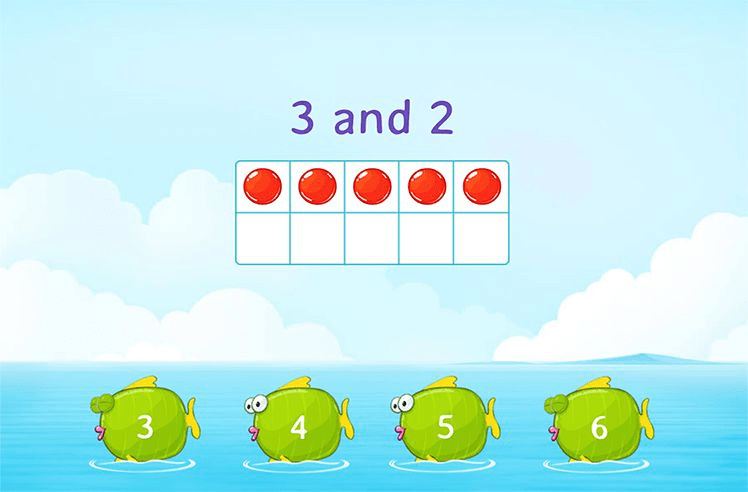
According to mathematics educators, the teaching and learning of mathematics requires certain special skills when compared with other subject areas. They also believe that educational games were created and employed for mathematics education. Research conducted to evaluate the impact of educational games on math learning concluded that mathematical educational games in k-12 classrooms not only promoted the intended learning outcomes but also fostered students’ motivation and positive attitudes toward mathematics learning. It has also been proven that“when math content is characterized in games, as well as how the games are designed and implemented, learning is strengthened “(Pan et al., 2022).
Another school of thought argues that using educational games effectively supports student learning in K-12 classrooms, creating a more student-centered environment. The benefits of using educational games to support learning in specific subject areas have also been identified. “For example, in learning geography, educational games support the understanding of geographical space, as players (students) move through 2D and 3D environments and experiences. Representations of place and space can also be explored through digital environments, that are more explicitly constructed than real-world space.” Games such as ‘Where in the World is Carmen Sandiego’, and ‘Treasures of Knowledge’, among others have been used to some degree to support certain aspects of social studies. As educational games are being incorporated into the K-12 curricula, more and more evidence of their ability to support students’ learning has been forthcoming (Hebert et al., 2018).
Other benefits of using educational games include achievement– with some educational games’ students are rewarded for skill mastered. Students are provided with the opportunity to complete tasks through different mediums. When students are rewarded, achievements allow them to experience a sense of competence and a feeling of appreciation because of their participation. Differentiation– students have multiple ways of progressing and learning at their own pace. Many educational games offer players a choice of paths as they achieve the goals of the game. Because multiple routes are provided, there is the potential for improvement of learning by increasing learner autonomy which plays an important role in promoting student motivation and engagement. When students are highly engaged it is more likely that they will perform better. Probing– educational games that encourage students to build, test, and explore their own hypotheses are very good for use in the classroom since they allow students to learn from their results and create new ones if necessary. Challenging – educational games should have students working to their fullest potential but within an attainable manner. It is said that “pleasant frustration increases students’ engagement in the game”. Tasks should not be too easy or too hard as it will lead to students becoming bored or frustrated. Challenges should match the students’ abilities so they will provide much motivation (Fadda et al., 2021).
Research suggested that “the keys to triumph in the use of educational games are determination, resourcefulness, and problem-solving skills”. The ability for students to redo tasks makes them more willing to try because they have an awareness that there are no failures in these games. Also, a level of persistence is developed when students who have experienced failure in a task are encouraged to continue working and do better as they replay a game. Students will attempt a task repeatedly until they achieve the required solution. Educational games are designed to be enjoyable and to promote and encourage students to continue to ‘play’(Adipat et al., 2021).
As an educator who has been using educational games in the classroom, I believe there are many benefits to be gained from them. Educational games offer a dynamic approach to learning and engaging students through interactive experiences. When students are entertained and at the same time learning educational content, games will make the teaching and learning process enjoyable and effective if it is purposefully chosen. Also, I think that educational games cater to diverse learning styles and foster critical thinking and problem-solving skills. In addition, the gamification element enhances the retention of concepts learned and motivates learners, while making education more accessible and appealing to each individual student.
The use of educational games in my classroom usually lead to the following:
• Increased student engagement – students are more attentive, focused, and more engaged as they interact during learning. This kind of engagement leads to students being more enthused and a higher level of participation is given in classroom activities making learning more enjoyable.
• Improved retention of concepts – the interactive nature of educational games reinforces learning through hands-on activities and experiences. As a result, students’ ability to remember and apply concepts is improved since they are actively involved in the learning process.
- Individualized learning – some educational games adapt to students’ progress on an individual basis and offer a more personalized learning experience. This allows students to work at their own pace, focusing on specific strengths and weaknesses that are addressed which fosters an effective learning environment.
- Motivation and collaboration – because of the rewards and achievements aspect of educational games, students show high levels of motivation as they actively participate and excel in their lessons. Also, collaborative games encourage students to work together as teams on completing tasks, communicating, and sharing ideas, and promoting a positive and interactive classroom culture. Students are also motivated when they use these games to compete with each other.
- Development of critical thinking skills – critical thinking skills, problem-solving skills, and decision-making skills are promoted with the use of educational games. Students need these skills to deal with the challenges of the real world and to contribute to their academic success and development.
The use of educational games covers a broad spectrum from traditional subjects like math and science to more specialized areas, providing various activities and tools for students to improve their learning experience.
 Instructional Technology EdS
Leave a comment